Leave Your Message

China Top Nail Gel Manufacturers for Global Buyers?

China’s Nail Gel industry has become a practical sourcing option for salons, distributors, and private-label brands worldwide. Grand View Research valued the global nail polish market at approximately US$14.3 billion in 2023. Its forecast also indicates continued growth through 2030. Nail Gel represents an important, technology-driven segment within this broader category.

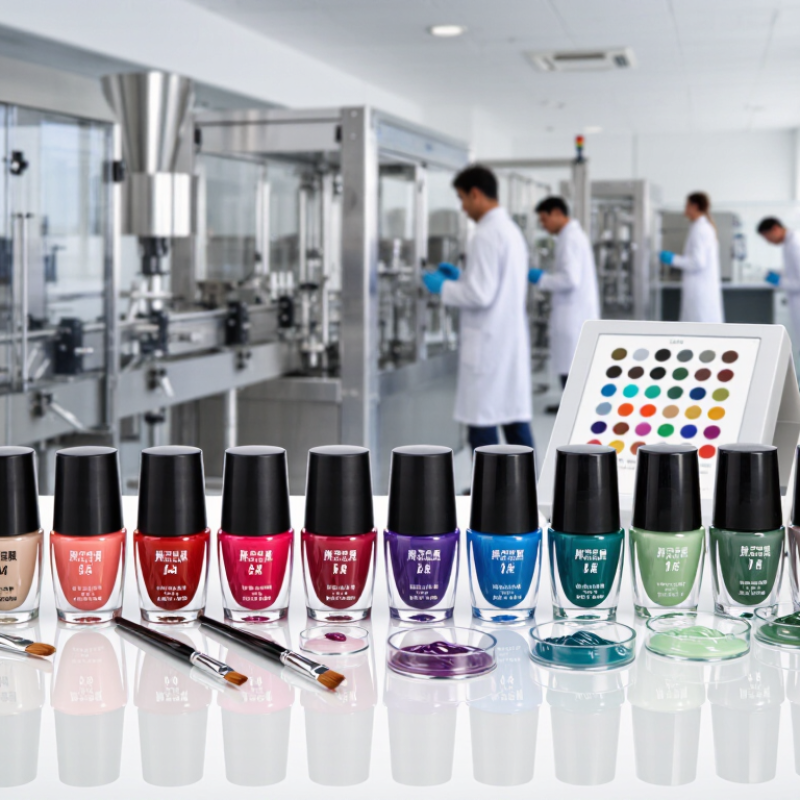
China’s advantage is not only production volume. Many established manufacturers now operate automated filling lines, color-matching laboratories, and controlled curing tests. A typical factory may test viscosity, adhesion, curing time, pigment stability, and bottle leakage before shipment. These details matter when a gel must remain smooth under salon lighting and cure evenly under LED lamps.

However, scale does not guarantee reliability. That deserves scrutiny. Global buyers should review factory experience, batch records, ingredient documentation, and independent testing results. ISO 22716-based cosmetic good manufacturing practices can provide useful evidence of process control. Buyers should also request Safety Data Sheets, ingredient lists, stability data, and packaging compatibility reports. Requirements vary by destination, including the European Union, the United States, and the United Kingdom.

Reports from Mordor Intelligence and Euromonitor consistently highlight Asia-Pacific’s strong role in beauty manufacturing and consumption. Yet market data cannot replace factory verification. Samples may look impressive while production consistency remains uncertain. This guide examines leading China Nail Gel manufacturers through product quality, formulation capability, compliance support, minimum order quantities, and export experience. It also considers communication speed, because a delayed color correction can affect an entire seasonal launch. Reliable sourcing is rarely dramatic. It is built through repeatable testing, clear records, and honest answers.
China Top Nail Gel Manufacturers for Global Buyers?

What Defines a Leading Nail Gel Manufacturer in China

What Defines a Leading Nail Gel Manufacturer in China

A leading nail gel manufacturer offers more than attractive color samples. In practical sourcing, consistency matters most. Each batch should show stable viscosity, smooth leveling, reliable adhesion, and predictable curing under tested lamps. A professional factory records these results before shipment. It should also control pigments, base materials, and packaging during production. Small details matter. A leaking cap can damage an entire carton.

Experienced manufacturers provide clear technical documents, including ingredient information, safety data sheets, batch records, and recommended curing conditions. They should explain how products perform on different nail types. Independent laboratory testing can support claims about stability, odor, and restricted substances. Buyers should ask for recent reports, not outdated files. Samples may look perfect, but production quality can change without strict monitoring.

Manufacturing depth also defines reliability. Look for trained technicians, clean filling areas, calibrated equipment, and traceable quality inspections. Flexible private-label support is useful, but communication must remain precise. Color codes, bottle sizes, brush designs, and carton specifications should be confirmed in writing. No factory is perfect. Even strong suppliers can miss a shade difference or delay a correction. That is why pilot orders, retained samples, and regular inspections remain valuable. A dependable partner welcomes questions and admits limitations instead of promising everything.

Key Nail Gel Products and Formulations for Global Buyers

China’s top nail gel manufacturers supply systems for salons, educators, and private-label distributors worldwide. Global buyers commonly select base gels, builder gels, color gels, and no-wipe top coats. Each product serves a different purpose. Base gels improve adhesion, while builder gels add structure to thin or uneven nails. Color gels need stable pigments, smooth application, and consistent curing under suitable lamps.

A reliable formulation should include clear ingredient information, batch details, recommended curing times, and storage guidance. Buyers should review the Safety Data Sheet and relevant cosmetic requirements for each target market. Some factories offer soak-off, low-odor, or restricted-ingredient options. However, “gentle” claims require evidence. Formulation labels can be confusing. In my experience, curing performance often changes with lamp wavelength, layer thickness, and room temperature. A product may perform well in testing, yet fail during busy salon use.

Tips: Request samples from several production batches. Test adhesion, flexibility, color stability, and removal time. Check whether the supplier can provide traceable documents and consistent packaging. Ask for small-scale trial orders before confirming large volumes. Do not judge quality from a glossy color chart alone. A beautiful sample can hide uneven curing or weak wear resistance. Some evaluations may also miss user technique, which is an important limitation. Manufacturers with documented quality controls, technical support, and transparent communication are usually safer long-term partners for global buyers.

China Top Nail Gel Manufacturers for Global Buyers? - Key Nail Gel Products and Formulations for Global Buyers

Product Category Typical Formulation Base Typical Viscosity Recommended Cure Typical Application Common Packaging Key Buyer Quality Checks
Soak-Off Gel Polish UV/LED-curable acrylate oligomers, reactive monomers, photoinitiators, pigments and additives Approx. 300–1,500 mPa·s LED: commonly 30–60 seconds; UV: commonly 120 seconds, subject to lamp output and film thickness Color coating over a prepared natural nail or enhancement 5–15 mL glass or plastic bottle with brush Color consistency, curing depth, brush performance, adhesion, soak-off time and pigment settling
Base Gel Flexible UV/LED-curable gel with adhesion-promoting oligomers and monomers Approx. 500–3,000 mPa·s LED: commonly 30–60 seconds; UV: commonly 120 seconds Foundation layer used to improve adhesion and reduce staining 8–15 mL bottle or 15–30 g jar Peel resistance, flexibility, compatibility with color gel, viscosity stability and shrinkage control
Builder Gel Higher-solid UV/LED-curable acrylate or urethane-acrylate gel system Approx. 10,000–80,000 mPa·s LED: commonly 60–90 seconds; UV: commonly 120 seconds Overlay, nail strengthening, short extensions and structured manicures 15–50 g jar or brush-in-bottle format Self-leveling behavior, heat spike, lifting, strength, filing characteristics and complete cure
Hard Gel Crosslinking UV/LED gel designed for durable, file-off enhancements Approx. 20,000–100,000 mPa·s LED: commonly 60–90 seconds; UV: commonly 120 seconds Longer extensions, overlays and high-strength nail architecture 15–50 g jar Flexural strength, adhesion, crack resistance, filing dust, heat generation and cure-through
Polygel / Hybrid Gel Acrylate oligomer matrix combined with polymer powders or reinforcing fillers; shaped before curing Very high, paste-like consistency LED: commonly 60–90 seconds; UV: commonly 120 seconds Dual-form extensions, overlays and controlled sculpting 30–60 g tube or jar Workability, non-running texture, adhesion, surface hardness, filing time and tube stability
Top Coat Gel Clear UV/LED-curable acrylate system with gloss, matte or scratch-resistant additives Approx. 300–2,000 mPa·s LED: commonly 30–60 seconds; UV: commonly 120 seconds Protective finishing layer for shine, matte effect or decorative surfaces 8–15 mL bottle Gloss retention, yellowing resistance, scratch resistance, tack-free finish and compatibility with nail art
Cat-Eye / Magnetic Gel Pigmented UV/LED gel containing magnetically responsive effect particles Approx. 500–3,000 mPa·s LED: commonly 30–60 seconds after magnetic effect formation Decorative color effects created with a manicure magnet before curing 8–15 mL bottle Particle suspension, magnetic response, color uniformity, settling, curing depth and top-coat compatibility
Glitter / Shimmer Gel Clear or tinted gel base containing cosmetic-grade glitter, mica or reflective effect particles Approx. 500–4,000 mPa·s LED: commonly 30–60 seconds; UV: commonly 120 seconds Decorative overlays, accent nails and layered nail-art designs 8–15 mL bottle or 5–30 g jar Particle size, edge smoothness, settling, color migration, full cure and removal behavior
Soak-Off Removal Gel Removable gel formulation engineered to soften with suitable nail-product remover Approx. 300–2,000 mPa·s LED: commonly 30–60 seconds; UV: commonly 120 seconds Temporary color systems and services requiring easier removal 8–15 mL bottle Removal time, adhesion balance, nail-plate staining, film integrity and compatibility with base/top systems
Buyer verification note: Cure times and viscosity ranges are typical industry specifications, not universal standards. Buyers should confirm the final technical data sheet, safety data sheet, ingredient list, batch records, stability results, migration or restricted-substance documentation, and market-specific cosmetic compliance before placing a commercial order.

How to Evaluate Chinese Nail Gel Manufacturers

China Top Nail Gel Manufacturers for Global Buyers?

How to Evaluate Chinese Nail Gel Manufacturers

China’s nail gel sector serves private-label, salon, and professional distributors worldwide. Grand View Research estimates the global nail polish market reached about USD 14.3 billion in 2023. That growth attracts capable factories, but also weak suppliers with polished websites. A practical evaluation should begin with production evidence, not catalog photos.

Ask for recent certificates, product specifications, ingredient lists, safety data sheets, and batch test reports. Check whether the documents match the actual factory address. Request samples from different batches. Measure viscosity, curing time, adhesion, odor, color stability, and removal performance. A glossy sample can mislead. Test it after several weeks, not only on delivery day.

Manufacturers should explain their quality system, equipment maintenance, raw-material traceability, and complaint process. ISO 22716 is a useful reference for cosmetic good manufacturing practice, although certification alone proves little. The European Commission’s Safety Gate reports repeatedly show that missing or inadequate cosmetic information creates market risks. Ask how the supplier manages restricted ingredients and market-specific labeling. Review audit records, worker safety procedures, and production capacity before accepting a low quotation. A cheap first order may hide unstable pigment or inconsistent curing. I would also compare three factories using the same test protocol. My own preference is a smaller, transparent supplier over a large factory that answers vaguely. That choice is not always perfect. Supplier claims still need independent verification.

How to Evaluate Chinese Nail Gel Manufacturers

This buyer scorecard uses practical procurement priorities for global nail gel sourcing. Compliance documentation and product safety receive the highest weighting because international buyers commonly need ingredient disclosure, Safety Data Sheets, batch traceability, stability testing, and market-specific regulatory support. The percentages are evaluation benchmarks rather than data from any individual company or brand.

Key references: EU Cosmetics Regulation (EC) No. 1223/2009, ISO 22716 Cosmetics GMP Guidelines, and OSHA Hazard Communication Standard.

Quality Standards, Certifications, and Production Capabilities

China’s top nail gel manufacturers for global buyers should prove quality beyond attractive samples. In practical supplier audits, buyers often inspect ISO 22716 or equivalent cosmetic GMP systems. These systems should cover hygiene, staff training, equipment cleaning, and controlled production records. Certifications matter only when their scope matches the actual factory and product category. Check the certificate holder, validity, issuing body, and audit coverage.

Reliable manufacturers provide batch numbers, raw material records, stability data, and documented color control. Each gel should show consistent viscosity, curing performance, adhesion, and odor across repeated batches. Testing may include microbial limits, heavy-metal screening, packaging compatibility, and safety documentation for the destination market. A factory with UV and LED curing tests can identify problems before shipment. However, a polished certificate does not guarantee perfect production. Human errors still happen. Buyers should request recent inspection records and independent laboratory reports.

Tips: Ask for three production samples, not one. Compare curing time under your lamps. Review SDS and ingredient details with a qualified regulatory specialist. Visit the filling area if possible, and observe sealed containers, label checks, and batch traceability. Confirm whether the factory manages small trial orders, private formulations, color matching, and scalable filling capacity. A supplier may promise fast customization, yet its laboratory staff or pigment controls may be limited. That gap deserves careful questioning.

Private Label, Export Services, and Supplier Selection Criteria

China’s nail gel manufacturing sector attracts global buyers through private label flexibility and competitive production capacity. Grand View Research valued the global nail polish market at approximately USD 14.3 billion in 2022, with projected growth of 6.2% annually through 2030. McKinsey also expects the wider beauty market to approach USD 580 billion by 2027. Demand is strong, but supplier selection requires more than comparing unit prices.

Private label buyers should request a complete technical file before approving samples. Check ingredient lists, batch records, stability results, shade consistency, and independent quality certificates. Ask whether the factory can provide SDS, COA, INCI documents, and export paperwork for the destination market. Where required, confirm product registration and responsible-person support. Packaging details matter too. A clear label, sealed brush, and readable batch code reduce avoidable complaints.

Export experience should be tested, not assumed. Request references for similar markets, realistic lead times, carton specifications, and written terms for defective goods. A low MOQ sounds attractive. It may also indicate limited quality control. I would compare three samples under the same curing lamp, then record viscosity, gloss, wear, and removal time. No scorecard is perfect. Supplier audits and small trial orders still expose weaknesses that polished presentations can hide.