Leave Your Message

Top 10 Nail Art Top Coat Suppliers for Global Buyers

Global buyers need more than glossy product photos when selecting a Nail Art Top Coat supplier. They need consistent curing, dependable packaging, clear specifications, and samples that match bulk orders.

Grand View Research’s Nail Polish Market Size report estimated the global nail polish market at approximately USD 14.3 billion in 2023 and forecast continued growth through 2030. This figure covers nail polish broadly, not top coats alone. It signals a sizeable category, but it cannot tell buyers which supplier will deliver a durable, even finish. That distinction matters.

A top coat is judged in small, visible details: a smooth brush stroke, a sealed free edge, and a surface that stays clear under daily wear. Buyers should compare formula options, viscosity, compatibility with base colors, packaging controls, and documented quality checks. Ask for sample batches and written product specifications. Then compare them under consistent application and curing conditions. Small differences show up fast.

No supplier is perfect. And a polished catalog proves little. Supplier lists are most useful when they help buyers ask better questions, not when they promise a universal winner. The following Top 10 Nail Art Top Coat Suppliers for Global Buyers offers a practical starting point for comparing product range, manufacturing capability, communication, and export experience. Treat every claim as something to verify, especially lead times and batch consistency. That extra check may feel tedious. It can prevent expensive surprises.
Top 10 Nail Art Top Coat Suppliers for Global Buyers

Nail Art Top Coats: Formulas, Finishes, and Performance Criteria

Nail Art Top Coats: Formulas, Finishes, and Performance Criteria

A top coat protects nail art and shapes its final appearance. Air-dry formulas suit quick, simple services, while gel formulas need the specified lamp and curing time. Check compatibility with the base color and decorative materials. Some layers wrinkle or dull when products do not work well together. Small details matter.

Finish changes the design. Glossy coats deepen color and make fine lines look crisp. Matte finishes soften reflections, but can make dark pigments appear slightly lighter. Glitter top coats add texture and sparkle; they may need extra layers for an even surface. Thin coats usually level better than one heavy application. Still, some designs need a little more coverage than expected.

For suppliers, compare more than the finish shown in a sample photo. Test the top coat on several colors and nail-art surfaces, then check shine, leveling, drying or curing, and resistance to everyday scratches. Look closely near the free edge, where lifting or chipping may appear first. Ask for clear application instructions and current product documentation. A single successful sample proves little. Results can vary with application thickness, lamp output, and storage, so record the conditions during testing. I sometimes find this step overlooked.


Global Buyer Priorities: Quality, Pricing, MOQ, and Export Capability

Top 10 Nail Art Top Coat Suppliers for Global Buyers

Global Buyer Priorities: Quality, Pricing, MOQ, and Export Capability

Choosing a top coat supplier takes more than comparing catalog photos. Ask for samples from the same batch you may later order. Check gloss, brush control, drying behavior, and wear on a few common nail-art designs. A clear coat should not blur fine lines or leave visible streaks. Test it under ordinary salon lighting, too. Studio photos can hide flaws.

Pricing needs context. Compare the quoted price with bottle size, packaging, and shipping terms, not just the unit cost. A low MOQ may suit a small launch, while larger orders could reduce per-unit costs. But do not commit to a volume that your sales plan cannot support. That risk is easy to underestimate.

Tips: Request a written specification, sample lead time, and estimated production schedule. Confirm how the supplier handles export documents, outer-carton labeling, and shipment updates. Ask for recent quality records where available, and clarify what happens if a batch differs from the approved sample. Small details matter. I would still leave room for a second review; supplier promises alone are not a quality check.

Cosmetic Compliance: ISO 22716, EU Regulation 1223/2009, and MoCRA (2022)

For global buyers comparing nail-art top coat suppliers, compliance is more than a certificate on a product sheet. ISO 22716 offers guidance for cosmetic good manufacturing practices, including clean production areas, controlled batch records, and traceable ingredients. Ask suppliers for site-specific quality documents and clear procedures for handling formulation changes. A certificate alone does not prove that every product meets every market’s requirements. Details matter.

In the European Union, Regulation (EC) No 1223/2009 requires a responsible person, a cosmetic product safety report, a product information file, and notification before a product is placed on the market. In the United States, MoCRA (2022) introduced requirements that include facility registration and product listing, subject to statutory exemptions, plus safety substantiation and serious adverse event reporting. Buyers should clarify who prepares and maintains each record. Paperwork can look complete yet leave gaps; that possibility deserves an honest review.

Tips: Request a sample batch record, ingredient specifications, and recent quality-control results. Check that product labels and safety documents match the exact formula and intended markets. Confirm responsibilities in writing, and recheck requirements before shipment.

Top 10 Supplier Profiles: Product Range, Manufacturing, and Market Reach

A useful supplier profile should show more than a glossy product catalogue. Compare top coat options by finish, cure method, brush design, bottle size, and compatibility with base coats. Look for clear manufacturing details, including batch testing, production capacity, and sample lead times. Ask whether the supplier can keep finish and viscosity consistent across repeat orders. Small details matter.

Market reach needs evidence, not just a list of export destinations. Grand View Research valued the global nail polish market at USD 14.3 billion in 2023 and projected a 5.9% compound annual growth rate from 2024 to 2030. This broader category includes more than top coats, so it is useful context, not a direct forecast for this product segment. For each of the ten profiles, check regional distribution, packaging flexibility, and documented quality procedures. A wide network can help, but delivery performance still varies. That judgment can be wrong.

Tips: Request samples from the same production line used for larger orders. Compare drying time, gloss, and chip resistance on identical nail tips. Record results. Also check how the supplier handles formula changes; a polished brochure cannot answer everything.

Top 10 Nail Art Top Coat Suppliers for Global Buyers - Top 10 Supplier Profiles: Product Range, Manufacturing, and Market Reach

The profiles below describe common supplier types in the nail top coat industry; they are illustrative sourcing models, not named companies or a verified ranking. Product availability, production capability, compliance, and export coverage should be confirmed directly with each prospective supplier.

Supplier Profile Typical Product Range Manufacturing Model Quality and Documentation to Check Potential Market Reach Best Fit for Buyers
1. UV/LED gel top coat specialist No-wipe, standard gloss, and other UV/LED-curable gel top coats. Formulates and fills gel products; curing compatibility should be tested with the buyer’s lamp and system. Request ingredient documentation, safety data, batch records, and curing and wear-test results for the specific formula. Can serve export markets where gel systems are sold, subject to local product rules and shipping requirements. Brands seeking gel-system products and technical coordination on curing.
2. Conventional lacquer manufacturer Solvent-borne glossy, quick-dry, and protective top coats for air-dry polish systems. Blending and filling operations designed for solvent-based formulations; packaging and transport need to account for flammable contents where applicable. Check formula specifications, safety data, stability results, batch traceability, and applicable dangerous-goods shipping information. Reach depends on export experience, carrier acceptance, and destination-market requirements for cosmetics and chemical shipments. Buyers needing top coats compatible with traditional air-dry nail polish.
3. Water-based polish specialist Water-based clear coats and protective finishes; available performance and finish options vary by formula. Develops and fills water-based products, with formulation and drying performance evaluated for the intended application. Review ingredient and safety documentation, shelf-life data, microbial controls where relevant, and wear-test results. Can target markets that sell water-based nail products; confirm local classification, claims, and labeling rules. Buyers developing water-based ranges or seeking an alternative to conventional solvent-borne polish.
4. Matte and specialty-finish producer Matte, satin, shimmer, glitter, or other effect top coats, depending on formulation capability. Produces effect formulas using suitable additives or particles; dispersion and consistency checks are important. Request finish samples, particle or effect-material specifications, stability data, and checks for settling or application consistency. Marketable through professional, retail, or online channels where specialty nail finishes are in demand. Brands building seasonal collections or differentiated nail-art finishes.
5. Nail-art effects and overlay supplier Clear art-sealing coats and selected effect products designed to protect or complement nail-art applications. May manufacture formulas in-house or coordinate formulation with a contract producer; compatibility testing is essential. Test over decals, powders, glitter, and other intended art materials; review adhesion, finish, and wear data. Suitable for professional-salon and consumer nail-art channels, subject to product positioning and local requirements. Buyers serving nail artists, salons, and specialist nail-art retailers.
6. Private-label and ODM partner Often offers existing top coat formulas with options for finish, packaging, and label customization. Uses ready-made or adapted formulas and supports brand-specific packaging; customization scope varies by supplier. Confirm formula ownership, change control, minimum order quantities, artwork approval, and product documentation for each SKU. Can support multiple regions when the buyer manages market-specific labels and compliance review. New and established brands seeking a branded product without building a factory.
7. Custom-formula contract manufacturer Buyer-specified top coats developed around target properties such as gloss, dry time, or application feel. Provides formulation development and production to an agreed specification; development timelines and scale-up should be agreed in advance. Agree on formula specifications, stability and compatibility testing, change control, batch release criteria, and intellectual-property terms. Reach is determined by the buyer’s distribution network and the manufacturer’s export, documentation, and logistics capabilities. Brands with defined performance targets or a need for product differentiation.
8. Large-volume contract producer Core clear top coats and established formulas produced in larger planned runs. Designed for repeat manufacturing and scheduled production; capacity, lead time, and minimum order quantities require confirmation. Review quality-system records, lot consistency data, production capacity, traceability, and procedures for nonconforming product. May support broad distribution when volume planning, export documentation, and freight arrangements are in place. High-volume brands, retailers, and buyers with forecastable demand.
9. Packaging-integrated manufacturer Top coats supplied with coordinated bottles, caps, brushes, and, where available, decoration options. Coordinates product filling with packaging sourcing or in-house packaging operations; component availability varies. Check bottle and cap compatibility, brush performance, leak and transit testing, component specifications, and packaging lead times. Can simplify multi-market launches, but market-specific labeling, language, and packaging obligations remain with the responsible parties. Buyers prioritizing coordinated sourcing and finished-product presentation.
10. Distributor-led sourcing partner A catalog of top coats sourced from one or more manufacturers, with selection varying by distributor. Typically focuses on sourcing, inventory, and sales rather than manufacturing; identify the actual producer for each product. Request manufacturer identity, current safety and product documents, lot traceability, and written confirmation of who handles quality issues. Often oriented toward particular domestic or regional sales channels; cross-border availability depends on authorization and logistics. Smaller buyers seeking local availability, mixed orders, or an intermediary for supplier access.

Supplier Comparison: Review Technical Data, Safety Documents, and Lead Times

For global buyers, a top coat supplier should be assessed on evidence, not polished catalog claims. Ask for a current technical data sheet covering viscosity, curing conditions, finish, and compatibility with common gel systems. Compare products under the same lamp and application method; otherwise, test results may not mean much. A no-wipe formula, for example, should be checked for surface tack and gloss after curing. Request an ingredient list, safety data sheet, and batch-level quality records where available. Confirm that documents match the exact formula being quoted. Safety files can differ by product and destination market, so buyers should verify local documentation needs with qualified advisers. A tidy spreadsheet can still mislead.

Lead times deserve the same scrutiny as product performance. Ask suppliers to separate sample preparation, production, packaging, and transit estimates. Confirm minimum order quantities, stock availability, and what happens if a batch fails inspection. Get peak-season timelines in writing, not just an optimistic estimate on a call. Samples help, but they do not guarantee that later batches will behave identically. Request retention samples or batch references when practical. The comparison is useful, but never perfect. A delayed reply or vague document is not proof of poor quality, yet it is a reason to ask clearer questions before placing a large order.

Top 10 Nail Art Top Coat Suppliers for Global Buyers

Supplier Comparison: Review Technical Data, Safety Documents, and Lead Times

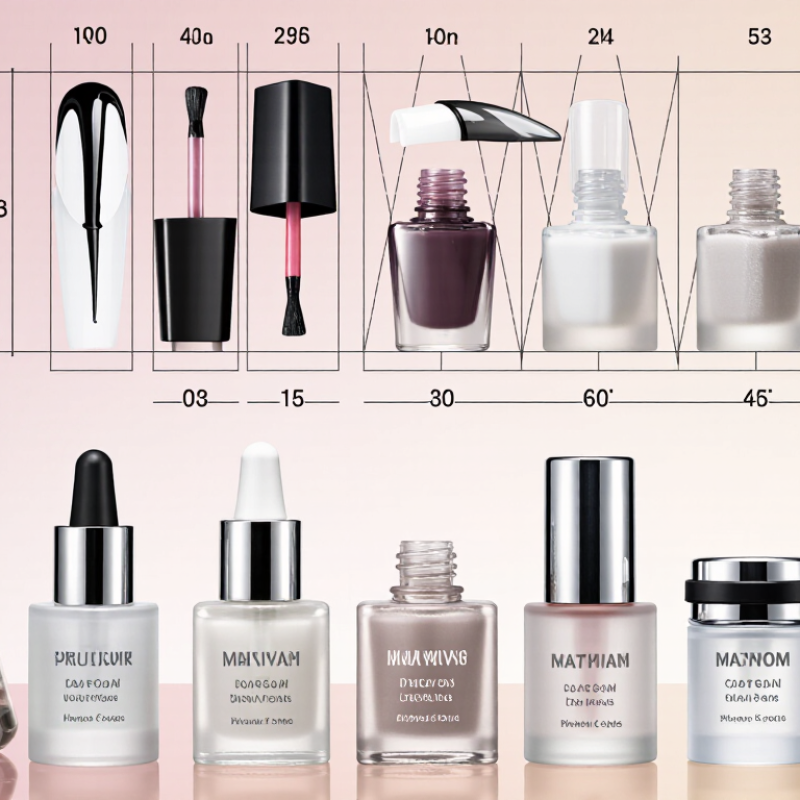
This chart shows the first 10 sections of the standard 16-section Safety Data Sheet (SDS) format—not supplier ratings or company-specific data. Use these sections to review product identification, hazards, handling, and physical properties; verify technical specifications and lead times directly with each supplier.