A glossy manicure can lose its appeal when the top coat chips, dulls, or smears. In 2026, choosing a Nail Art Top Coat means weighing more than shine. Drying time, finish, wear, and compatibility with polish all matter. A quick-dry formula suits rushed touch-ups. A no-wipe gel top coat can preserve detailed designs, while matte formulas change the look entirely. Small differences show.
The wider market offers useful context, but not a direct answer. Grand View Research estimated the global nail polish market at USD 14.3 billion in 2023 and projected a 6.6% compound annual growth rate from 2024 to 2030. That figure covers nail polish broadly, not top coats alone. It signals consumer interest, not proof that one formula performs best. Worth remembering.
This guide compares the main top coat types by finish, application, curing needs, and everyday durability. It also considers practical details: whether a formula works over regular polish, how it handles nail art, and what removal may involve. Product claims vary, and results depend on application and wear habits. A perfect top coat? Not always. The best choice is the one that protects the design without making the manicure harder to use or maintain.
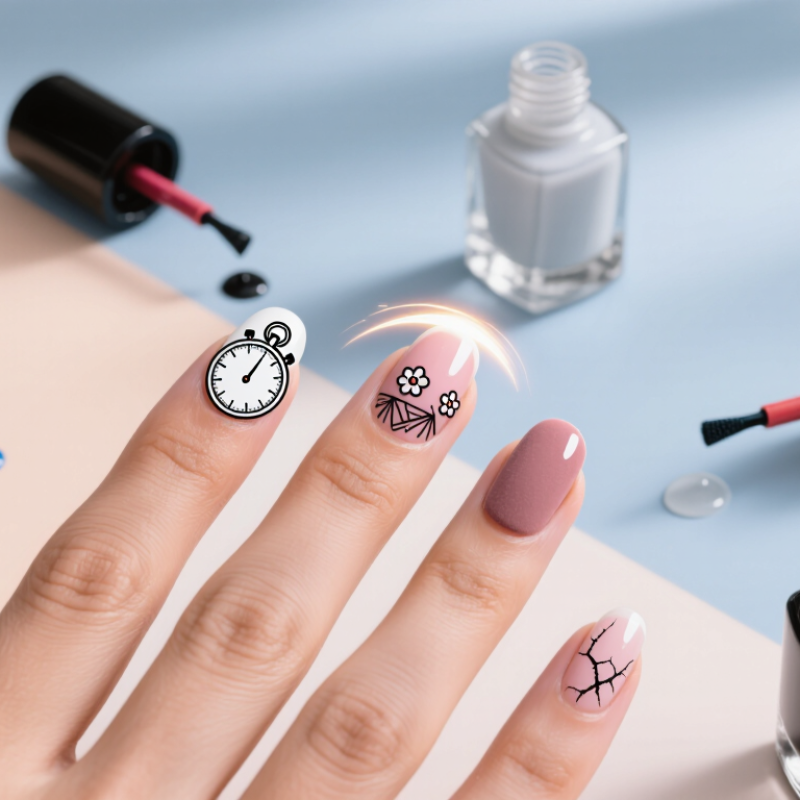
A top coat is the clear final layer that protects nail art and changes how its surface looks. Formula matters: air-dry top coats set without a lamp, while gel top coats need a compatible curing lamp. Some formulas are made to stay flexible; others dry into a firmer shell. Check the instructions, since curing times and removal methods vary. The labels can still be confusing.
Finish is the visible effect. Glossy coats make colors look deeper and sharpen reflective details. Matte coats soften shine, but can make raised designs appear flatter. Specialty finishes may add shimmer or a lightly textured look. Application method matters too: float the brush over the design with light strokes, rather than pressing down. This helps reduce smearing, especially over fine lines or fresh polish.
Tips: Use a thin, even layer and seal the free edge—the nail’s tip—to help limit chips. Let regular polish dry as directed before adding a top coat. With gel, avoid skin contact and follow the product’s curing instructions. A small test on one nail can reveal whether the finish dulls metallic art. I still find that some designs need a different top coat than expected.
Gloss top coats deepen color and give hand-painted details a wet, glassy finish. They suit most designs, but thick coats can blur fine lines.
Matte top coats mute shine, making velvet-like finishes and contrast designs stand out. Apply them evenly; streaks show clearly on dark polish.
Quick-dry formulas help when a manicure needs to set fast. They are useful at home, though “dry to touch” does not always mean fully hardened. That matters.
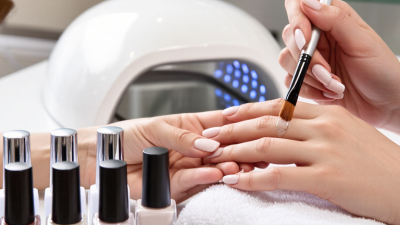
No-wipe gel top coats cure under a compatible lamp and leave no sticky layer to remove. They can give chrome powders a smooth base, but the lamp and gel system must be used as directed.
Specialty top coats include glitter, iridescent, ridge-filling, and effect finishes. Match the texture to the art: chunky glitter may need extra smoothing, while a thin effect layer preserves delicate details.
Grand View Research’s Nail Polish Market report estimated the global market at USD 14.3 billion in 2023, with projected growth from 2024 to 2030. That broad market figure does not rank top-coat types. Choose by finish, drying method, and design compatibility—not popularity alone. Test a small area first.
A top coat can look glossy on day one and still scratch by day three. To compare wear, ASTM D4060 uses a Taber Abraser: abrasive wheels rotate over a coated sample under a set load. After a chosen number of cycles, testers assess mass loss and visible damage. Less loss may indicate better abrasion resistance. It does not prove a top coat will last longer on every person’s nails.
Testing needs careful control. Apply each product at the same film thickness, then follow its curing instructions and record them. Use the same substrate, wheel type, load, and cycle count for every sample. ASTM D4060 is designed for organic coatings on rigid panels, so results from panels may not match flexible, curved nails. I would report the method and limits, not just a “winner.” Small setup differences matter.
Tips: Photograph samples before and after testing under the same light. Note chips, scratches, and gloss changes alongside mass loss. Keep the raw results. A top coat that resists abrasion well may still feel too rigid or show poor adhesion on a natural nail.
A gel top coat cures when its photoinitiators receive suitable light energy. Many UV/LED lamps emit light within the 365–405 nm range, but that range alone does not confirm compatibility. Check the top coat’s curing instructions and the lamp’s stated wavelength instead of relying only on “UV/LED” wording. Numbers can mislead. Two lamps with similar labels may differ in output, coverage, and exposure time. Match the product’s stated wavelength requirements as closely as possible.
Use the recommended cure time and apply thin, even coats. Thick layers can block light from reaching deeper gel. Keep each finger flat under the lamp; thumbs often angle away from the LEDs. That small positioning mistake is easy to miss. A soft or wrinkled layer may suggest incomplete curing, while surface tack alone does not prove failure. Wavelength charts are easy to overread: they offer a useful starting point, not a cure guarantee. If compatibility details are unclear, ask the seller or choose a pairing with clear curing instructions.
Standard, no-wipe, and effect gel top coats must be cured with a lamp wavelength compatible with their formula. These bars show representative lamp emission peaks, not a ranking of curing performance. Check the top coat’s curing instructions; a dual-wavelength lamp emitting near 365 nm and 405 nm may suit more formulas, but does not guarantee compatibility with every product.
A nail-art top coat may look like a clear finishing layer, but its formula still needs a full EU compliance review. Under Regulation (EC) No 1223/2009, the responsible person must ensure a safety assessment, maintain a Product Information File, and notify the product through the CPNP before market placement. Check every ingredient against the regulation’s annexes, including restrictions on colorants, preservatives, and UV filters. For gel top coats, verify the specific photoinitiators and curing instructions. Small differences between formulas matter.
The European Commission’s 2023 Safety Gate report recorded 3,412 alerts; cosmetics represented 32% of notified products. This figure covers cosmetics broadly, not nail top coats specifically. Still, it shows why ingredient review should not be treated as paperwork alone. Regulation (EU) 2020/1682 restricts HEMA and Di-HEMA TMHDC to professional use and requires warnings about allergic reactions. A clear bottle can hide a complex ingredient profile. Check supplier specifications, ingredient naming, and label claims against the finished formula. I would also recheck documentation after reformulation; that step is easy to overlook. These checks support compliance, but they cannot replace a qualified safety assessor’s review.