
Leave Your Message

Top 10 Liner Gel Nail Art Products for Global Buyers

Fine lines can transform a simple manicure into crisp geometry, delicate florals, or precise French tips. Liner Gel Nail Art products are designed for controlled strokes, but their performance depends on more than a fine brush. Salon professionals and distributors often compare gel consistency, brush length, pigment coverage, curing requirements, and packaging before placing an order. Small details matter. A brush that splays under pressure can make steady lines difficult, while overly thick gel may drag or leave uneven edges.

This Top 10 guide introduces liner gel options for global buyers, focusing on practical differences rather than promises of a perfect result. Each product should be assessed against its stated instructions, ingredient information, shelf life, and suitability for the intended lamp. Check whether the brush arrives protected, whether the cap seals securely, and whether product details are available from the supplier. Samples can help buyers test flow and coverage on nail tips before committing to larger quantities. That takes extra time.

No single formula fits every technician, climate, or workflow. A smooth gel in one studio may feel too runny in another, and personal technique affects the finish. Buyers should verify current product documentation and request clear answers about storage and application. This comparison aims to make those questions easier to ask—not replace careful testing. There is room for judgment. Brush control, reliable information, and consistent handling are useful starting points when choosing liner gels for different markets and services.
Top 10 Liner Gel Nail Art Products for Global Buyers

What Liner Gel Is and How It Is Used in Nail Art

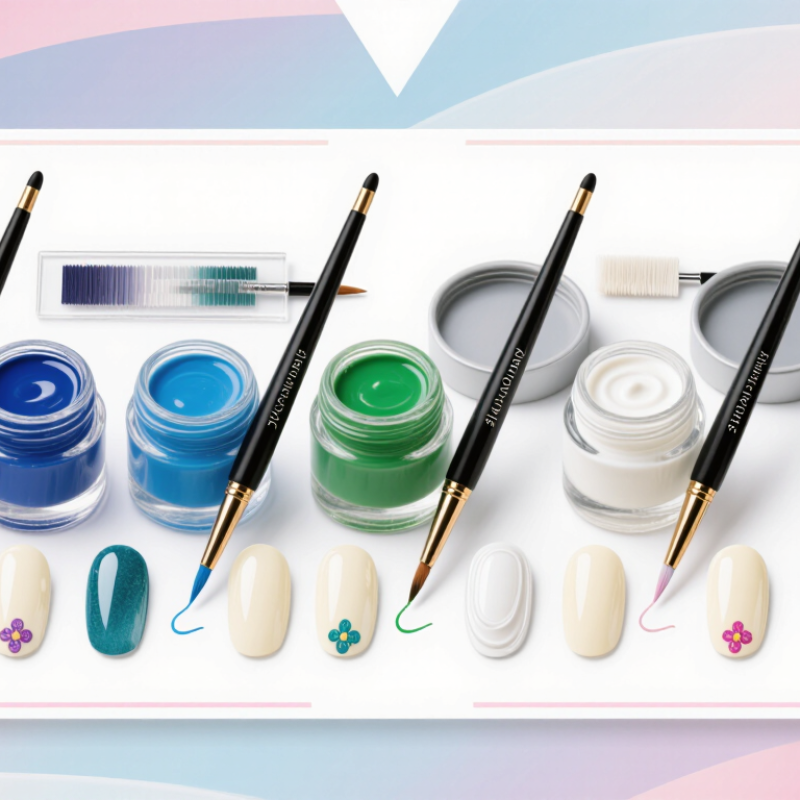
Liner gel is a nail-art gel made for controlled, narrow strokes. Its texture is often thicker than regular color gel, while strong pigmentation helps fine lines show clearly. It may come in a small pot or a bottle with a slim brush. Not every formula behaves the same.

Artists use liner gel to draw curved outlines, delicate grids, dots, lettering, and details such as leaf veins. A steady hand helps, but brush pressure matters too: light pressure makes thin marks, while a firmer touch can create broader lines. Try a few strokes on a practice tip first. The result can look uneven at first.

For a clean design, apply the gel over a prepared, cured nail surface. Use a small amount on the brush; excess gel can form raised edges or blur tight details. Work in short strokes, turning the finger rather than stretching your wrist when possible. Cure the design using the lamp and timing specified for that product. Avoid getting uncured gel on skin, and clean tools as directed. Even experienced nail artists may need to adjust their technique when a gel feels more fluid or dense than expected.

Key Features to Compare Before Choosing a Liner Gel

When comparing liner gel nail art products, look closely at the brush before judging the color. A fine, evenly tapered tip can make narrow lines and tiny petals easier to control. Check whether the bristles spring back after bending. A brush that splays may leave uneven edges. Small details matter.

Next, compare viscosity and pigment. A gel that is too runny can spread across a curved nail, while a very thick formula may drag and interrupt a line. Check swatches over both light and dark base colors. Does one stroke look even, or does it need several passes? More layers can add bulk. Cure the gel according to its label, and confirm that the recommended lamp type and curing time fit your setup.

Packaging and product information deserve attention too. A narrow bottle opening can help limit gel on the brush, but it may be awkward to clean. Look for clear ingredient, storage, and use instructions, and avoid skin contact; stop using the product if irritation occurs. Still, no single formula suits every technique. A detail I might overlook is how the gel behaves after the bottle has been open for a while. Test a small design first, and note whether the lines stay crisp after curing.

Top 10 Liner Gel Nail Art Products for Global Buyers

Key features to compare before choosing a liner gel. The scores below are an editorial comparison guide—not product test results or market statistics.

Compare formula and application details alongside practical purchasing requirements. Confirm curing instructions, ingredient and safety documentation, packaging specifications, and shipping compliance with each supplier before ordering.

Top 10 Liner Gel Nail Art Products and Their Best Uses

Liner gel products differ in brush length, viscosity, and pigment strength, so the best choice depends on the line you need. An ultra-fine liner suits delicate hairlines and tiny lettering, while a fine liner helps create crisp French tips. Medium liners work well for grids and simple geometric patterns. Long-bristle striping gels draw flowing curves across a nail with fewer stops. Short-bristle detail gels offer better control for petals and small dots. Keep the brush clean; gel buildup can make a precise tip feel clumsy.

For contrast, black liner gel defines shapes and borders, while white liner adds sharp highlights over darker colors. Metallic liner gel creates reflective accents, especially in narrow arcs or foil-like strokes. A highly pigmented color liner is useful for bold outlines and color-block designs. Glitter liner gel adds sparkle to a single accent line without covering the whole nail. Small details matter.

Choose a product that stays in place long enough to paint, but still levels smoothly. Too-thick gel may leave ridges; very fluid gel can spread into nearby color. Cure each layer according to its product instructions, and test the brush on a practice tip before working on a finished set. I still find long brushes awkward around tight corners. They save time on curves, but not every curve looks better when perfectly smooth.

How to Assess Product Quality, Safety, and Compatibility

For global buyers, liner gel quality is more than a smooth swatch. Check whether the formula makes fine, even lines without pooling, stringing, or sudden gaps. A narrow brush should keep its shape after repeated use, and the cap should close cleanly. Small details matter. Request current ingredient information, a safety data sheet, and batch-specific quality records; compare the documents with the actual sample. A tidy specification sheet may not reveal batch variation, so keep reference samples and record shade, viscosity, and application notes.

Safety and compatibility need equal scrutiny. Confirm the recommended curing conditions and check that they match the lamp’s wavelength and output. Curing can vary with lamp design, layer thickness, and pigment load. Do not judge curing by surface shine alone. Follow handling and ventilation guidance, and avoid skin contact. For a new color or supplier, test a thin line on a prepared tip and assess curing, adhesion, and wear before placing a larger order. A test is helpful, not definitive. It cannot replace qualified safety review or market-specific documentation. Ask suppliers to clarify unclear claims, even when that slows the decision.

Top 10 Liner Gel Nail Art Products for Global Buyers — How to Assess Product Quality, Safety, and Compatibility
Rank Liner Gel Type Typical Use Typical Formula and Handling Quality Checks Safety and Compatibility Checks
1 Fine Detail Liner Gel Thin outlines, small lettering, delicate motifs, and precise nail-art details. Usually a highly pigmented gel with a controlled, non-runny consistency; applied with a fine liner brush. Check for smooth brush flow, even pigment distribution, clean line edges, and no persistent clumps or separation. Confirm curing instructions and lamp requirements with the supplier. Keep uncured gel off skin and verify the ingredient and safety documentation for the destination market.
2 Long-Line Striping Gel Long straight lines, curves, geometric patterns, and continuous accents. Typically formulated to remain workable long enough to draw extended lines without flowing excessively. Test line continuity, leveling, brush compatibility, and whether the gel stays in place during application. Check that the product cures as directed with the specified lamp. Test it over the intended base and top coat, since layer compatibility can vary by formulation.
3 High-Pigment Opaque Liner Gel Bold designs and opaque lines on light or dark base colors. Often has a dense pigment load; some products may require a thinner application to support thorough curing. Assess opacity at the recommended application thickness, color consistency between samples, and whether pigment settles during storage. Do not assume a thick or very opaque layer cures fully. Follow the supplier’s validated application and curing instructions for the specified lamp.
4 Metallic Liner Gel Metallic outlines, decorative accents, and reflective details. May contain metallic-effect pigments or reflective particles; appearance depends on particle distribution and application. Check for uniform visual effect, smooth application, and whether particles remain evenly distributed rather than forming streaks or clumps. Ask for the full ingredient information and applicable product documentation. Confirm that the recommended lamp and application system are suitable for this specific formula.
5 Glitter Liner Gel Sparkling outlines, accent lines, and decorative borders. Contains glitter or other decorative particles suspended in a gel base; particle size and loading affect brush flow. Evaluate particle distribution, ease of drawing a continuous line, and whether the product can be applied evenly without excessive buildup. Check that the intended layer thickness and particle content are covered by the supplier’s curing directions. Confirm the product is compatible with the planned base and top coat.
6 White Liner Gel French-tip details, fine outlines, lettering, and high-contrast nail art. Usually a strongly pigmented gel; white shades can be more demanding to apply evenly than less opaque colors. Check shade consistency, smooth coverage, and whether the product stays workable without dragging or leaving gaps. Ask the supplier for the recommended layer thickness and curing conditions. Avoid relying on appearance alone to judge whether the gel is fully cured.
7 Black Liner Gel Fine outlines, graphic patterns, borders, and detailed contrast work. Typically a highly pigmented dark gel; application thickness can affect cure performance. Check that lines remain crisp, the color is consistent, and the gel does not spread beyond the intended design. Verify curing guidance for dark or heavily pigmented shades with the supplier. Use the specified lamp and do not apply thicker than the recommended layer.
8 Flexible Liner Gel Decorative lines on flexible enhancements or nail surfaces where some flexibility is desired. Formulated for a balance of line control and flexibility; actual performance depends on the complete nail system. Test adhesion and wear on the intended substrate, and check whether the line cracks, lifts, or loses definition during normal use. Request compatibility guidance for the target base, builder gel, or enhancement material. Conduct a small system test before wider use.
9 Thick-Consistency 3D Liner Gel Raised lines, textured accents, and dimensional nail-art details. Usually thicker than a standard detail liner gel to help retain a raised shape; it may need careful, controlled placement. Assess shape retention, application control, and whether the recommended amount can be cured according to the product instructions. Raised or bulky applications may not cure like thin lines. Follow the supplier’s specific instructions and avoid assuming that longer exposure alone makes an unsuitable layer safe.
10 Soak-Off Liner Gel Nail art designed for use within a soak-off gel system. Intended to be removed using the removal method specified by the product supplier; removability can depend on application and layering. Check adhesion, wear, and removal performance on the intended system, following the stated application and removal process. Confirm compatibility with the matching base and top products, and request clear removal and curing instructions. Do not assume all products described as soak-off behave identically.

Buyer note: These are generic product categories, not brand-specific rankings or performance guarantees. Request the current technical data sheet (TDS), safety data sheet (SDS), ingredient information, lamp specifications, and destination-market documentation from each supplier. Uncured gel products may cause skin sensitization; avoid skin contact and follow the product’s application, curing, and removal instructions. A “HEMA-free” claim alone does not establish that a product is hypoallergenic or suitable for every user.

What Global Buyers Should Know About Sourcing and Shipping

Top 10 Liner Gel Nail Art Products for Global Buyers

What Global Buyers Should Know About Sourcing and Shipping

Sourcing liner gel products starts with clear specifications. Confirm brush length, tip shape, bottle capacity, and gel viscosity with the supplier. A fine brush can help create narrow lines, but performance should be checked across several samples. Request product details, ingredient information, and quality records before placing a larger order. Compare sample colors under consistent lighting; screens can make shades look deceptively similar. Small differences matter.

Shipping needs planning, especially when orders include liquid products. Ask the supplier how each bottle is sealed, cushioned, and packed to limit leaks or breakage. Confirm carton dimensions, gross weight, shipping options, and estimated dispatch time in writing. Transit estimates can change, so allow extra time for seasonal delays and destination-specific import checks. Packaging that looks sturdy in a photo may not withstand rough handling. Request clear packing photos before dispatch, and keep communication records if details change.

Tips: Test samples before bulk ordering. Check brush control and cap fit. Confirm shipping documents and delivery terms with your logistics provider. A small trial order may cost more per unit, but it can reveal problems early. Don’t assume every shade or formula behaves the same.