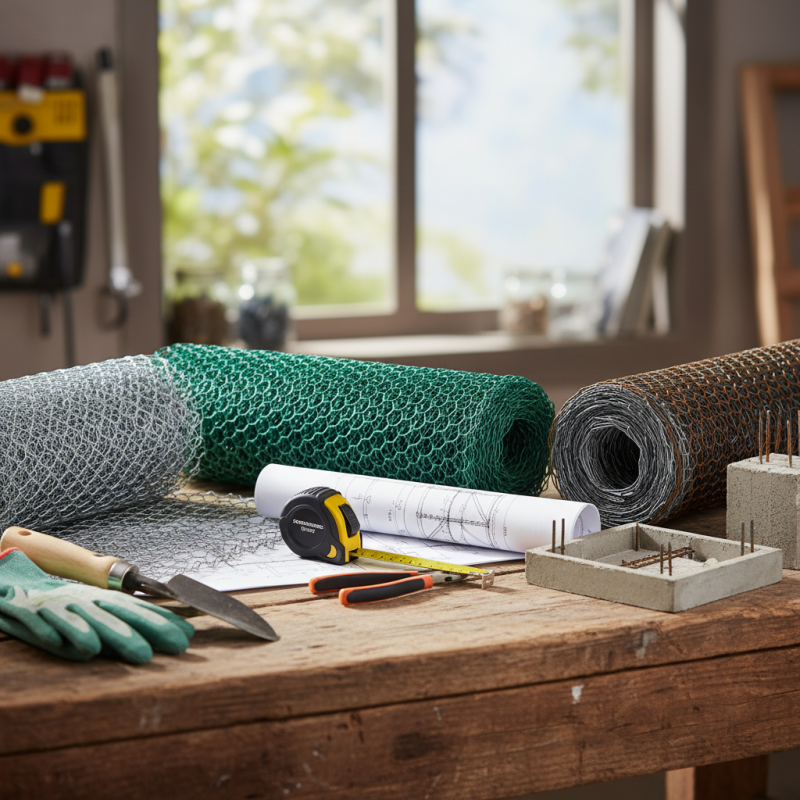
How to Choose the Best Hexagonal Wire Mesh for Your Project?
Choosing the right hexagonal wire mesh for your project can be challenging. This material is versatile and widely used. Understanding its unique properties is essential.
hexagonal wire mesh comes in various sizes and materials. Each option serves different purposes. For example, lighter mesh is suitable for garden fencing. Heavier options are ideal for construction and reinforcement. However, there are pitfalls to consider. Using the wrong type can lead to project failures.
Consider your specific needs carefully. Reflect on the environment and application. Will it withstand weather conditions? Will it provide adequate support? Make informed choices. A little research can avoid costly mistakes. The right hexagonal wire mesh can enhance your project's success significantly.
Understanding the Basics of Hexagonal Wire Mesh Materials and Applications
Hexagonal wire mesh is a versatile material used in various applications. Understanding its characteristics is crucial for making the right choice. Commonly made from galvanized steel or plastic, this mesh offers corrosion resistance and durability. Different wire gauges are available, which affects strength and flexibility. For fencing or support, thicker wires are often preferable.
The mesh's hexagonal shape adds stability and allows it to be used for diverse purposes. It's commonly found in gardens, where it supports climbing plants and protects delicate flowers from pests. In construction, hexagonal mesh serves as reinforcement in concrete and as a safety barrier. However, selecting the wrong type may lead to project failure.
Consider your project's specific needs. Analyze factors such as climate, intended use, and budget. Each variable influences your final choice. Don't overlook the importance of installation methods too. A poorly installed mesh can cause issues later. Reflecting on these details helps streamline your decision-making process.
How to Choose the Best Hexagonal Wire Mesh for Your Project?
| Dimension (mm) | Wire Diameter (mm) | Mesh Size (mm) | Material | Application |
| 1000 x 2000 | 2.0 | 25 | Galvanized Steel | Animal Fencing |
| 2000 x 3000 | 1.5 | 30 | Stainless Steel | Garden Protection |
| 1500 x 1000 | 2.5 | 40 | PVC Coated Steel | Commercial Fencing |
| 1200 x 2400 | 3.0 | 20 | Galvanized Steel | Construction Site Safety |
Evaluating Mesh Size: Importance of Aperture Dimensions in Specific Projects
Choosing the best hexagonal wire mesh for your project involves careful evaluation of various factors, particularly the aperture dimensions. Aperture size directly affects the functionality of the mesh. For instance, a larger mesh may allow for unwanted materials to pass through. This could be problematic in certain applications, such as gardening or construction.
When considering mesh size, think about your project's unique needs. Are you using the mesh for fencing, support, or filtration? Each application demands a specific aperture size. A tighter mesh can provide better structural integrity but may increase material costs. It's essential to balance your budget with the desired performance.
Tips: Always measure the intended area before purchasing. This ensures you select a mesh that fits perfectly. Test the mesh against potential materials to see if it meets your criteria. Reflect on your choice if the mesh doesn't serve the intended use efficiently. A miscalculation in aperture size can lead to significant project delays.
Hexagonal Wire Mesh Aperture Sizes for Different Applications
Assessing Wire Gauge: How Thickness Influences Strength and Durability
When selecting hexagonal wire mesh, understanding wire gauge is crucial. The gauge refers to the thickness of the wire. Thicker wires generally provide more strength and durability. For example, a 14-gauge wire can withstand harsher conditions than a 20-gauge wire. This difference matters in projects where strength is paramount. Yet, thicker wire can also be heavier and harder to work with.
The application should also dictate your choice of gauge. If the mesh is for fencing, consider an optimal balance between strength and flexibility. A thicker wire may resist bending and breaking, but it could be overkill for light fencing. Sometimes, a lighter gauge may suffice, saving costs without compromising on function. Pay attention to the vulnerabilities that might arise with thinner wires, such as reduced durability against sharp impacts.
Think about the overall design too. A well-thought-out mesh structure can include varied gauge sections, catering to different stress areas. This approach often leads to a more efficient use of materials. While it’s tempting to choose the strongest options available, reflect on the project’s demands to make more informed decisions.
Identifying Coating Options: Selecting Between Galvanized and PVC Coatings
When selecting hexagonal wire mesh, the choice of coating plays a crucial role in durability and application. Two common options are galvanized coatings and PVC coatings. A report by the Wire Mesh Association indicates that galvanized wire can last up to 50 years. This impressive lifespan results from the zinc layer that protects against corrosion. It's especially beneficial for outdoor projects where exposure to the elements is a concern.
On the other hand, PVC-coated wire mesh offers additional aesthetic appeal and extra protection. The coating can resist chemicals and UV light. This makes it suitable for varied environments. However, the PVC layer may chip or wear over time. A study by the American Society for Testing and Materials found that while PVC-coated mesh may fade after several years, it still performs well against rust and corrosion.
Choosing between galvanized and PVC coatings depends on the project's specific needs. Consider the environment. Galvanization is often more cost-effective for basic applications. But for those requiring enhanced appearance and chemical resistance, PVC can be worth the investment. Both options have their merits and drawbacks. Assessing your project’s long-term goals is essential before making the final decision.
Considering Environmental Factors: Corrosion Resistance and Longevity in Use
When selecting hexagonal wire mesh, environmental factors are crucial. Corrosion resistance impacts longevity and durability. According to industry reports, nearly 50% of wire mesh failures are due to corrosion. This highlights the need for materials that can withstand harsh conditions.
Galvanization is a common method to enhance corrosion resistance. Wire mesh treated with zinc can last up to 30 years in outdoor environments. However, even galvanized mesh can face challenges in coastal areas or places with high humidity. This is a significant point to consider when planning your project.
Longevity also depends on the application of the mesh. For instance, mesh used in soil retention may not need the same level of protection as that used in fencing. The environment will dictate the best choice. Regular inspections are essential as well. Degradation over time isn’t always visible. Often, mesh looks fine while suffering from unseen damage. This can lead to unexpected failures. Understanding these nuances aids in making an informed choice.