Leave Your Message

China Top Diamond Top Coat Suppliers for Global Buyers

China has become an important sourcing destination for Diamond Top Coat products used in professional salons and home nail systems. Its supplier network includes manufacturers, private-label factories, and trading companies with different capabilities. This article introduces leading supplier categories and explains what global buyers should examine before placing an order.

A reliable supplier should provide clear product specifications, including viscosity, curing method, gloss retention, bottle size, brush type, and recommended application steps. Ask for a complete ingredient list, safety data sheet, certificate of analysis, and relevant quality records. Request samples before making a large purchase. Observe the brush movement, surface smoothness, curing time, and resistance to daily wear. Small details matter. A 15 ml bottle may look premium, yet its brush can still apply unevenly. Packaging quality also deserves attention, especially when products travel long distances through different climates.

Experience suggests that supplier selection is not based on price alone. Buyers should assess factory communication, batch consistency, production capacity, lead times, and after-sales support. Video audits, sample comparisons, and independent testing can reduce avoidable risks. Certifications may support credibility, but they should be checked against the actual factory and product scope. No supplier is perfect. Even experienced buyers can overlook changes in raw materials or labeling requirements. Therefore, this guide focuses on practical evaluation rather than impressive promises. It aims to help distributors, salon brands, and importers compare China’s Diamond Top Coat suppliers with greater confidence, clearer evidence, and more realistic expectations.

China Top Diamond Top Coat Suppliers for Global Buyers

What Diamond Top Coat Is and Why Global Buyers Choose China

China Top Diamond Top Coat Suppliers for Global Buyers

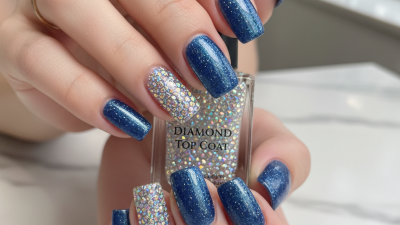
A diamond top coat is usually a clear finishing layer for manicures. It creates a glass-like shine, smoother texture, and improved surface resistance. The term “diamond” often describes the visual effect or hardness claim. It does not always mean real diamond particles are present. Buyers should check the ingredient list carefully.

Grand View Research valued the global nail polish market at about USD 14.63 billion in 2023. It also forecasts approximately 6.5% annual growth from 2024 to 2030. The report does not measure diamond top coats separately. That limitation matters. Market growth supports demand, but it does not prove every premium claim.

Global buyers often consider China because its cosmetics supply chain combines formula development, packaging, filling, and export services. Experienced suppliers can provide sample batches, stability records, safety data sheets, ingredient disclosures, and batch traceability. These documents support quality review and regulatory preparation in different markets. China Customs trade classifications also show strong activity in manicure and pedicure preparations, although classification data cannot confirm product performance. Ask for independent testing. Request curing results, gloss retention, brush consistency, and compatibility data. Small details often expose weak production control. China can offer flexible order quantities and customized packaging, but low prices may hide uneven viscosity or slower curing. That risk deserves honest testing.

Key Features and Quality Standards of Diamond Top Coat Products

For global buyers, diamond top coat quality means more than a sparkling finish. It requires stable viscosity, strong adhesion, smooth leveling, and reliable gloss after curing. Grand View Research estimated the global nail polish market at approximately US$14 billion in 2023, showing why consistent performance matters across many climates and supply chains.

Professional suppliers should provide an INCI ingredient list, Safety Data Sheet, batch number, and traceable quality records. ISO 22716 offers a recognized framework for cosmetic good manufacturing practices, while EU Regulation 1223/2009 sets strict product-safety requirements for the European market. Buyers should also check curing wavelength, recommended lamp time, abrasion resistance, and yellowing results. A clear coat may look perfect under showroom lights, yet fail after repeated washing. That caveat matters.

Tips: Request samples from different batches. Test them on natural nails and common gel systems. Measure gloss after 24 hours, then inspect the surface after several days. Confirm whether the “diamond” effect comes from approved cosmetic glitter or reflective particles. Ask for stability data at controlled temperatures, such as 4°C, room temperature, and 40°C. Published reports often differ in market estimates, so buyers should avoid treating one forecast as absolute truth. Even experienced purchasers can overlook curing compatibility or brush consistency. A small pilot order exposes these weaknesses before large-scale distribution.

How to Evaluate China-Based Diamond Top Coat Suppliers

Choosing China-based diamond top coat suppliers requires more than comparing catalog prices. Ask for complete product specifications, including viscosity, curing time, hardness, gloss retention, and recommended application thickness. A reliable supplier should explain its testing methods and provide recent batch records. Request samples from different production dates. One sample can hide inconsistency.

Evaluate the factory’s practical experience. Check whether it controls raw material storage, mixing temperature, filling accuracy, and packaging cleanliness. Clear photographs help, but video inspections and independent quality testing offer stronger evidence. Confirm whether the supplier can support your target market’s labeling, safety documentation, and shipping requirements. Do not accept vague claims such as “premium quality” without measurable data. I have found that response speed matters, but it should never replace technical proof.

Tips
Test adhesion on your actual nail system, not only on a supplier’s sample surface. Observe the brush, leveling, curing behavior, and final shine after several days. Ask how defects are handled and whether replacement terms are written clearly. Compare at least three suppliers using the same checklist. Small details matter. A supplier may appear professional while overlooking cap sealing or batch traceability. Leave room for doubt, and verify what seems obvious.

Manufacturing, Customization, and Export Capabilities

China’s diamond top coat suppliers are increasingly judged by manufacturing discipline, not sparkle alone. Fortune Business Insights valued the global nail polish market at about USD 14.33 billion in 2023, with continued growth expected through 2032. This wider market creates demand for stable finishes, faster sampling, and dependable export service.

Experienced factories control particle dispersion, viscosity, brush loading, and settling during production. A practical sample should be checked after shaking, brushing, curing, and repeated removal. Uneven glitter is a warning sign. Some manufacturers offer custom particle sizes, transparent or tinted bases, private packaging, and adjusted drying or curing profiles. However, customization can increase minimum order quantities and testing time. Buyers should request batch records, ingredient declarations, safety data sheets, and packaging compatibility results. ISO 22716-based cosmetic manufacturing practices can also support traceability and cleaner production controls.

Export capability depends on more than a finished bottle. Suppliers should understand carton testing, leakage prevention, multilingual labels, and destination-market documentation. The International Trade Centre reports that China remains a major global exporter across many cosmetic product categories, but export performance differs sharply between factories. This matters. A supplier may produce attractive samples yet struggle with repeat shade accuracy or shipping paperwork. Even strong factories need review. Request retained samples, independent testing where appropriate, and clear agreements for defect handling. That extra step feels slow, but it can prevent expensive rework.

China Manicure and Pedicure Preparation Exports

This chart presents China's annual export value for HS 330430, which covers manicure or pedicure preparations, including products commonly used in nail-care supply chains. The figures are retrieved from the UN Comtrade public database and are shown in current US dollars. The category is broader than diamond top coat alone and does not identify individual companies or brands.

Source: United Nations Comtrade Database, reporter China, export flow, HS 330430.

Ordering, Compliance, and Quality Assurance for International Buyers

China Top Diamond Top Coat Suppliers for Global Buyers

International buyers should treat ordering as a documented process, not a quick price comparison. Request a complete specification sheet before discussing volume. It should state viscosity, curing method, finish, packaging size, shelf life, and storage temperature. Ask for a production sample from the same formula planned for shipment. A small sample can reveal lifting, uneven sparkle, or a strong odor after curing.

Compliance documents must match the destination market. For cosmetic nail products, request an ingredient list, safety data sheet, batch information, and relevant manufacturing records. Check whether the ingredient names follow accepted international formats. Packaging should show net content, warnings, usage directions, and traceability details. Customs descriptions must also be accurate. A vague product name can delay clearance. Requirements vary by country, so an independent local review is sensible.

Quality assurance works best with written acceptance standards. Specify color tolerance, brush condition, bottle leakage limits, curing performance, and filling accuracy. Ask for pre-shipment photos, batch samples, and test records before releasing the balance payment. Independent inspection can confirm carton counts and random product quality. Do not rely only on a polished catalog. A sample may pass in a warm studio but fail after cold transport. That gap deserves attention. Suppliers may also change raw materials without explaining the effect, so approval procedures should require written notice. Some buyers skip this step. It often becomes an expensive lesson.

China Top Diamond Top Coat Suppliers for Global Buyers - Ordering, Compliance, and Quality Assurance for International Buyers

International buyer evaluation table for diamond-effect nail top coat sourcing, documentation, compliance, ordering, and quality assurance.

Evaluation Dimension Buyer Requirement or Reference Required Evidence Recommended Acceptance Check International Buyer Note
Product Definition Clear specification for diamond-effect or glitter nail top coat, including finish, transparency, viscosity, curing method, bottle size, brush type, and intended use. Technical data sheet, approved product specification, shade or effect reference, and retained reference sample. Compare production sample with the approved reference under consistent lighting and application conditions. “Diamond” or “crystal” effect descriptions should be defined visually and technically rather than used as an uncontrolled marketing term.
Ingredient Disclosure Complete ingredient information using recognized cosmetic ingredient names, together with restricted-substance and allergen information where applicable. Ingredient list, formulation statement, raw-material declarations, and restricted-substance confirmation. Review ingredients against the destination market’s current cosmetic restrictions before artwork approval. Formula compliance is destination-specific; approval for one market does not automatically establish compliance in another.
Safety Data Sheet A current Safety Data Sheet for the commercial product or relevant mixture, prepared for the importing market. SDS covering product identification, hazards, composition, handling, storage, transport, disposal, and emergency measures. Check revision date, product name, composition consistency, hazard classification, and language requirements. SDS requirements are commonly aligned with the UN Globally Harmonized System, but local implementation rules still apply.
European Union Compliance For products placed on the EU market, assess requirements under Regulation (EC) No 1223/2009 on cosmetic products. Product Information File, Cosmetic Product Safety Report, responsible-person details, compliant labeling, and evidence of required notification. Obtain market-specific regulatory review before commercial sale; verify label language and mandatory particulars. The importer or designated responsible person should confirm legal obligations; a supplier certificate alone is not sufficient.
United States Compliance For products marketed as cosmetics in the United States, assess applicable Federal Food, Drug, and Cosmetic Act requirements and the Modernization of Cosmetics Regulation Act of 2022. Ingredient and labeling review, facility and product records where applicable, adverse-event procedure, and safety substantiation. Confirm whether claims could change the product’s regulatory category and verify current registration or listing obligations. Claims such as treatment, strengthening, or disease prevention may create regulatory implications beyond ordinary cosmetic claims.
Good Manufacturing Practice Manufacturing controls should be consistent with cosmetic GMP principles; ISO 22716 is a widely used cosmetic GMP reference. ISO 22716 certificate where available, internal GMP procedures, batch records, sanitation controls, and training records. Check certificate scope, issuing body, validity, manufacturing site, and whether the audited site matches the production site. Certification supports supplier qualification but does not replace product-specific safety and compliance assessment.
Quality Management A documented quality system with controlled specifications, change management, nonconformance handling, and corrective action. Quality manual or procedure index, inspection plans, corrective-action records, and change-control process. Audit traceability from incoming materials to finished-goods release and shipment records. ISO 9001 may indicate a quality-management framework, but it is not a substitute for cosmetic GMP or safety testing.
Incoming Raw Materials Critical resins, solvents, pigments, glitter or effect particles, and packaging components should be approved before use. Supplier certificates of analysis, material specifications, lot numbers, incoming inspection records, and approved-supplier list. Verify identity, appearance, odor, relevant physical properties, and document traceability by lot. Effect particles must be compatible with the product system and intended cosmetic use; do not assume craft glitter is suitable for cosmetics.
Finished-Product Testing Testing should match the approved specification and product risk profile. Certificate of analysis or batch release record covering appearance, odor, viscosity or flow, net content, and other agreed tests. Use a pre-agreed sampling plan and acceptance limits; retain samples from each commercial batch. Acceptance limits should be written numerically where possible instead of relying only on terms such as “good” or “standard.”
Application Performance Evaluate leveling, brush marks, effect distribution, gloss, wear resistance, curing behavior, and compatibility with the intended base coat. Application test report, approved panel or sample set, curing instructions, and compatibility results. Test under defined film thickness, lamp type, curing time, substrate, temperature, and humidity conditions. Performance can vary substantially with lamp output, base product, application technique, and film thickness.
Stability and Shelf Life Shelf-life claims should be supported by stability evidence in the final container. Real-time or accelerated stability data, packaging-compatibility assessment, and recommended storage conditions. Check separation, settling, viscosity change, odor, color or effect change, leakage, and closure integrity. Accelerated stability data can support development decisions but should not automatically be treated as equivalent to full real-time shelf-life data.
Packaging Compatibility Bottle, brush, cap, liner, wiper, and decoration should remain functional and compatible with the formula throughout storage. Packaging specification, component drawings, compatibility report, leakage test, and decoration adhesion results. Inspect fill level, torque, leakage, brush alignment, cap fit, label adhesion, and external damage. Packaging should be validated using the final formula and final component combination, not only empty-pack samples.
Labeling and Artwork Label content must match destination-market rules, product classification, language requirements, net quantity, batch identification, and responsible-party information. Final artwork approval, translated label copy, ingredient declaration, warnings, directions, batch-code format, and barcode specification. Conduct a regulatory proofread before printing and compare printed packaging against the approved artwork. Do not print large quantities before confirming the importing country’s mandatory label particulars.
Order Quantity and Sampling Request samples before mass production and define minimum order quantity, packaging quantity, and permissible overage or shortage. Quotation, pro forma invoice, sample approval record, packaging breakdown, and commercial specification. Ensure the approved sample is linked to the purchase order and cannot be replaced without written approval. Commercial terms should clearly separate sample development, tooling, packaging, testing, and production charges.
Production and Shipment Planning Agree production milestones, inspection dates, document deadlines, shipping terms, and responsibility for export paperwork. Purchase order, production schedule, packing list, commercial invoice, transport document, and agreed Incoterms® rule. Confirm quantities, carton marks, product codes, batch numbers, and shipping documents before dispatch. Incoterms® rules allocate specific costs, risks, and responsibilities; they do not replace a complete sales contract.
Pre-Shipment Inspection Inspection should be performed against the approved specification before goods leave the manufacturing site. Inspection report, sampling plan, defect classification, photographs, carton count, and corrective-action record if needed. Check product appearance, fill quantity, closure, labeling, carton condition, quantity, and random functional samples. Inspection scope and acceptance limits should be agreed before production, not after a dispute occurs.
Traceability and Complaints Each shipment should be traceable to raw-material lots, production records, finished-product testing, and distribution documents. Batch code system, retention-sample log, complaint procedure, recall procedure, and corrective-action workflow. Verify that a selected shipment can be traced backward and forward through documented records. Agree complaint-response time, investigation responsibilities, evidence requirements, and escalation contacts in the supply agreement.
Sustainability and Restricted Materials Assess packaging materials, recycled-content claims, waste handling, and restricted-substance requirements relevant to the destination market. Material declarations, packaging composition, supplier environmental statements, and applicable test reports. Validate claims with documented evidence and ensure packaging declarations match the actual components. Environmental claims should be specific, verifiable, and consistent with the importing market’s advertising and labeling rules.
Buyer qualification principle: The information above is a supplier-screening framework based on commonly used international cosmetic, quality-management, product-safety, packaging, and trade-documentation practices. Final requirements must be confirmed for the destination country, product claims, formula, packaging, and sales channel before purchase or market placement.